As a proud Texan living in San Antonio, I’ve watched Governor Greg Abbott for years. He talks tough on the border, illegal immigration, and protecting Texas values. But dig deeper, and troubling patterns emerge: attendance at the World Economic Forum (WEF) in Davos, massive campaign cash from influential donors (including prominent Muslim and Indian business leaders), Texas leading in H-1B visas for skilled foreign workers, and mixed messages on mosque construction and Muslim immigration.
These aren’t isolated issues—they point to a governor potentially compromised by big-money interests and globalist agendas, rather than truly serving everyday Texans. We need a shift back to grassroots leadership, not establishment holdouts tied to lobbyists and mega-donors. That’s why I’m supporting Doc Pete Chambers for Texas Governor in 2026.
Abbott’s Globalist Connections: Davos and the WEF
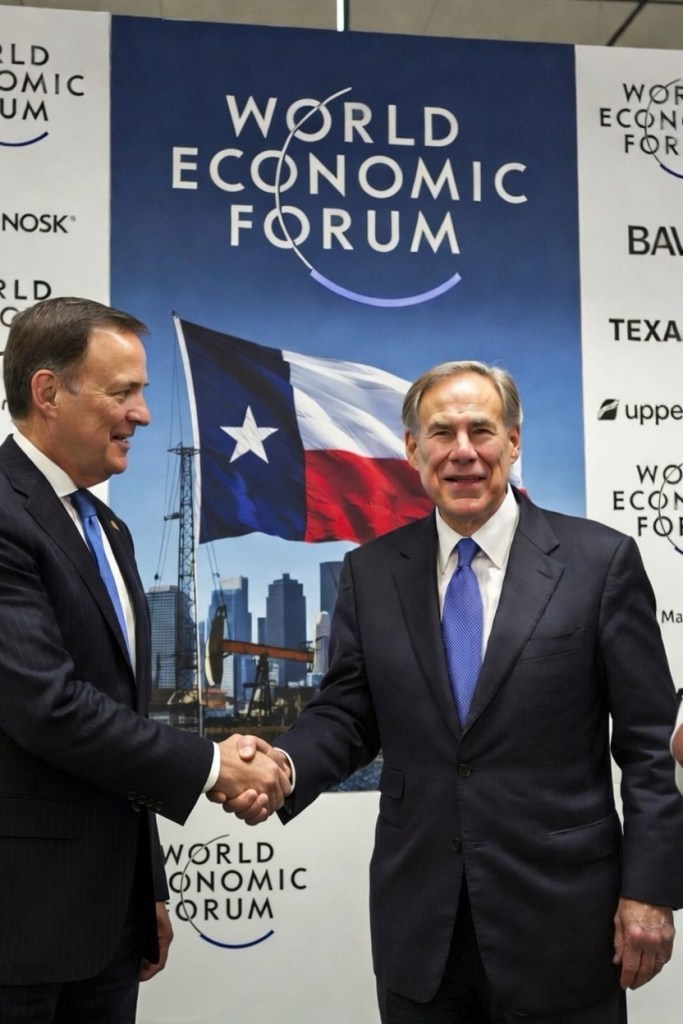
Governor Abbott has repeatedly participated in the World Economic Forum in Davos, Switzerland, leading economic development missions that included WEF stops. In 2020, he touted Texas business opportunities there, meeting with figures like then-Secretary Wilbur Ross (gov.texas.gov/news/post/governor-abbott-to-lead-economic-development-mission-to-israel-and-switzerland; his own X post from January 2020). The WEF is often criticized for promoting “globalist” policies like stakeholder capitalism and international coordination—ideas many conservatives see as eroding national sovereignty.
While Abbott frames these trips as promoting Texas jobs and trade, critics argue they align him too closely with elite international forums over Texas-first priorities.
Record-High H-1B Visas in Texas
Texas ranks second nationally in H-1B visa activity (behind California), with cities like Austin leading filings in recent years (myvisajobs.com/reports/h1b/work-state; h1bgrader.com). In 2025 data, Texas saw tens of thousands of approvals for skilled foreign workers, often from India and other countries. This fuels tech and energy sectors but raises questions about job competition for Americans and long-term demographic shifts.
Abbott champions business growth, yet his rhetoric on “stopping” certain immigration doesn’t fully square with policies enabling high legal inflows via visas.
Big Donors and Potential Conflicts
Abbott’s campaigns rely heavily on large donors—no limits in Texas mean mega-contributions dominate. S. Javaid Anwar, a Pakistani immigrant and Midland Energy CEO, has been one of his top individual donors, contributing millions (e.g., standout in 2022 cycles per Ballotpedia and Transparency USA; transparencyusa.org/tx/contributor/s-javaid-anwar). Other business leaders from similar backgrounds in energy have given big too.
Abbott has received over $100 million+ for his 2026 reelection war chest (houstonchronicle.com/politics/texas/article/greg-abbott-campaign-cash-21299196.php, January 2026 reporting). These donors gain access, board appointments, and influence—classic pay-to-play concerns in a state where money talks loud (texastribune.org/2022/10/18/greg-abbott-texas-fundraising-governor-donors).
Meanwhile, Abbott has aggressively opposed certain Muslim-related projects, like suing to halt the EPIC City development (a proposed community with homes, a mosque, school, etc., near Dallas), claiming it could impose Sharia law (nytimes.com/2025/04/13/us/texas-muslims-abbott.html; newsweek.com coverage). He declared CAIR a terrorist organization and targeted mosque-linked initiatives (houstonpublicmedia.org/articles/news/religion/2025/11/24/536890). Yet heavy donations from Muslim/South Asian business figures continue.
This raises questions: Is the tough talk selective, while economic ties remain open?
The Grassroots Alternative: Doc Pete Chambers
We don’t need more of the same—another term for a governor flush with big-donor cash and global ties. Enter Doc Pete Chambers, a retired U.S. Army Lieutenant Colonel, Green Beret, Special Forces flight surgeon, and true servant-leader running in the 2026 Republican primary (docpetechambers.org).
Chambers’ platform is straightforward and Texas-first:
• Secure the border decisively.
• Phase out property taxes to ease burdens on families.
• Defend life, medical freedom, election integrity.
• Reject establishment politics—no big-lobbyist reliance.
He’s positioned as a grassroots warrior: “A godly man taking a stand for justice, freedom, and the Constitution” (his campaign site). Unlike Abbott’s donor-driven machine, Chambers emphasizes citizen-led government, drawing from his military service (Purple Heart, Bronze Star) and real-world experience fighting for Americans (news-journal.com/2025/12/06/gop-gubernatorial-candidate-ex-green-beret-targets-border-and-water-issues-property-taxes).
Texas deserves a governor accountable to voters, not elite donors or Davos crowds. Chambers represents the change we need—independent, principled, and focused on everyday Texans.
Call to Action: Support Grassroots Over Big Money
Texas politics has long been dominated by unlimited contributions and lobbyist influence. It’s time to demand better. Support candidates who reject mega-donors and prioritize people over power.
Check campaign filings at the Texas Ethics Commission or Transparency USA. Read about Chambers at docpetechambers.org. Get involved—volunteer, donate small, spread the word.
Texas is too great for compromised leadership. Let’s elect a governor who truly puts Texans first.
Sources include official government releases, Texas Tribune, Transparency USA, OpenSecrets, news reports from NYT, Newsweek, Houston Chronicle, and candidate sites. Views are my own as a concerned Texan.
Written BY Christian Phillips
 Constitutional patriot Blog