Blog

  • The Rapture: A Modern Invention, Not a Biblical Truth

    By Christian Phillips

    As a Messianic Christian Jewish believer, my faith is anchored in the Scriptures, studied diligently in their original Hebrew and Greek contexts. I’ve read the Bible cover to cover, and one truth stands clear: the popular doctrine of the “rapture”—the notion that believers will be secretly whisked away to heaven before a period of great tribulation—is not rooted in Scripture. It’s a relatively recent theological construct that distorts the biblical call to endurance and witness through persecution in the name of Messiah Yeshua (Jesus).

    This article examines why the rapture is not biblical, tracing its historical origins, highlighting the absence of the term in the original languages, and addressing misinterpretations in translations. My exhortation, as always, is to “study and show yourself approved” (2 Timothy 2:15), never taking one man’s word as divine truth from God.

    The Word “Rapture” Is Absent from Scripture—And That Matters

    The term “rapture” does not appear in the Bible—not in the Hebrew of the Tanakh, not in the Greek of the New Testament, nor in the Aramaic portions. The concept stems from the Latin Vulgate, where the Greek word harpazo in 1 Thessalonians 4:17 is translated as rapiemur, meaning “we shall be caught up” or “seized.” [33] But harpazo simply denotes a forceful snatching or carrying away, as seen in Acts 8:39 (Philip’s transport by the Spirit) or 2 Corinthians 12:2-4 (Paul’s vision of heaven), with no implication of a secret, pre-tribulation escape. [35]

    In the Hebrew Bible, no equivalent term or concept suggests believers are removed before trials. For example, Daniel 12:1 speaks of a “time of trouble” where the righteous are delivered through, not from, distress. The Hebrew word tsar (tribulation or distress) implies enduring hardship, not evading it. [32]

    English translations often obscure these nuances. Words like harpazo or tsar lose their contextual weight when rendered vaguely as “caught up” or “trouble” in English, leading to assumptions not present in the original texts. If the rapture were a foundational doctrine, wouldn’t the inspired authors have used explicit language? Their silence speaks volumes. Study the original languages yourself—never take one man’s word as divine truth.

    The Historical Roots of the Rapture: A 19th-Century Novelty

    The rapture, particularly the pre-tribulation version, is a modern invention, not an ancient teaching. It emerged around 1830 through John Nelson Darby, an Anglo-Irish theologian and founder of the Plymouth Brethren movement. [44] Darby’s dispensationalism divided history into distinct eras, introducing the idea that believers would be secretly raptured before a seven-year tribulation. [38]

    This concept, barely 200 years old, gained traction through the Scofield Reference Bible (1909), which embedded rapture theology in its notes, influencing Protestant thought. [41] Later, 20th-century works like Hal Lindsey’s The Late Great Planet Earth (1970) and the Left Behind series by Tim LaHaye and Jerry Jenkins (1995 onward) popularized the idea, selling over 80 million copies and embedding fear of being “left behind” in evangelical culture. [44]

    Before Darby, no major theologian, church council, or early church father taught a pre-tribulation rapture. Figures like Irenaeus (c. 130–202 CE), Justin Martyr (c. 100–165 CE), and Tertullian (c. 155–240 CE) described believers enduring tribulation under the Antichrist before Christ’s return. [10] Irenaeus, in Against Heresies, explicitly places the church in the end-time persecution, with no mention of escape. [15] Claims of pre-Darby rapture teachings, such as in the Didache or Pseudo-Ephraem, are misinterpretations when examined closely. [16]

    The rapture’s absence from 1,800 years of Christian thought, coupled with its rise during 19th-century cultural shifts like the Industrial Revolution and millennial fervor, reveals it as a product of its time, not divine revelation. Study history for yourself—don’t accept one man’s word as truth.

    Misinterpretations in Translation: Greek and Hebrew Clarity

    Rapture advocates often point to 1 Thessalonians 4:16-17: “For the Lord himself will descend from heaven with a cry of command… and the dead in Christ will rise first. Then we who are alive… will be caught up (harpazo) together with them in the clouds to meet the Lord in the air.” This is not a secret event but a loud, visible return of Christ tied to the resurrection, not a separate rapture. [30] Paul’s purpose was to comfort persecuted believers about their deceased loved ones, not promise escape from trials.

    Another key verse, Matthew 24:40-41 (“one will be taken and one left”), is often misread as a rapture. The Greek paralambanō (taken) aligns with judgment, as in the flood narrative (v. 39), where the wicked are “taken” in destruction, while the righteous, like Noah, remain through God’s protection. [19] Hebrew parallels in Genesis 7 reinforce this: the righteous endure, not vanish.

    Similarly, Revelation 3:10 (“I will keep you from the hour of trial”) uses tēreō ek, meaning “guard through,” not removal, echoing Yeshua’s prayer in John 17:15 for protection in the world. [1] English translations like the KJV muddy these waters with ambiguous phrasing, but the original languages tell a consistent story of endurance. Dig into the Greek and Hebrew yourself—don’t rely on one man’s translation.

    Believers’ Role in the Tribulation: To Witness, Not Escape

    If all believers are raptured, who will preach to unbelievers during the tribulation? Scripture answers: believers will be here, proclaiming the gospel amid persecution. Matthew 24:9-14 states that disciples will face hatred and death, yet “this gospel of the kingdom will be proclaimed throughout the whole world… and then the end will come.” The 144,000 in Revelation 7 and the two witnesses in Revelation 11 are among those sealed to testify, enduring martyrdom for Yeshua. [0]

    As a Messianic Jew, I see this reflecting the Hebrew prophets—Elijah, Jeremiah, Daniel—who suffered to call people to repentance. Yeshua endured the cross; His followers are called to take up theirs (Matthew 16:24). The rapture doctrine risks leaving believers unprepared for persecution, fostering a false hope of escape. Revelation 7:14 describes saints coming “out of the great tribulation,” having persevered, not avoided it. [5] Study these passages for yourself—don’t let one man’s teaching define your faith.

    Conclusion: Study and Stand Firm

    The rapture, a 19th-century invention absent from the Bible’s Hebrew and Greek texts, is not a divine truth but a human construct. It distorts the call to endure as witnesses for Messiah, preaching through tribulation until His glorious return. As Messianic believers, let’s cling to the Scriptures, studying the original languages and historical context to discern truth.

    “Study to show yourself approved” (2 Timothy 2:15), testing every teaching against God’s Word. Never take one man’s word as divine truth—trust the Spirit to guide you into all truth through the Bible alone.

    Christian Phillips is a Messianic Christian Jewish believer passionate about studying Scripture in its original context and encouraging others to seek truth directly from God’s Word.

    The rapture
  • The Epstein List Debacle: A Christian’s Call for Truth and Accountability

    By Christian Phillips

    Posted on July 15, 2025

    As a follower of Jesus Christ, Yeshua, I believe we are called to stand for truth, protect the vulnerable, and hold the guilty accountable—no matter who they are. The Jeffrey Epstein saga, with its swirling claims of a secret “client list,” broken promises, and political finger-pointing, is a test of that calling. From Attorney General Pam Bondi’s flip-flopping to accusations of a deep-state hoax tied to Obama and Clinton, the Epstein files have sparked a firestorm, especially among Donald Trump’s MAGA base. High-profile figures like retired Lt. Gen. Michael Flynn, Charlie Kirk, and other big-ranking officials are now loudly calling out the BS in how this case has been handled, amplifying the demand for answers. Yesterday, Lara Trump promised more transparency, but with Trump’s approval ratings reportedly tanking per the Rams Swansey report, the stakes are higher than ever. As a Trump supporter, I stand with his vision to make America great, but when I see wrong, I call it out. My allegiance is to God alone, not any man. When it comes to pedophiles and their enablers, we as believers have a responsibility to demand justice. Let’s unpack this mess and why it matters.

    A List That Was, Then Wasn’t, Then Was a Hoax?

    The Epstein case has long been a lightning rod for speculation, with many hoping a “client list” would expose powerful figures tied to his heinous crimes. In February 2025, Attorney General Pam Bondi fueled the fire, claiming on Fox News that the Epstein “client list” was “sitting on my desk right now to review.” She even invited MAGA influencers to the White House, handing out binders labeled “The Epstein Files: Phase 1.” But those binders? Mostly public-domain documents, leaving supporters feeling betrayed.

    Then, on July 7, 2025, the DOJ and FBI dropped a bombshell memo: no client list exists, no blackmail evidence was found, and Epstein’s 2019 death was ruled a suicide. Bondi backtracked, saying her “list” comment referred to the entire case file, not specific names. This reversal ignited outrage among MAGA supporters, who saw it as a broken promise. As a believer, I find this bait-and-switch troubling. We’re called to speak truth, and obfuscation in a case involving such grave sins against the vulnerable is unacceptable.

    The plot thickened when Trump himself took to Truth Social, calling the Epstein files a “hoax” cooked up by Barack Obama, Hillary Clinton, and the “losers and criminals of the Biden administration.” Without evidence, he compared the files to the discredited Steele dossier, framing them as a plot to sabotage his movement. While I support Trump’s leadership, I can’t ignore when the truth seems sidelined. As believers, we must call out wrong, even when it’s our own side. Pedophiles and their enablers must face justice, and no political loyalty should shield them.

    MAGA’s Revolt and Bondi’s Fall from Grace

    The backlash from Trump’s base has been fierce, and it’s not just grassroots influencers. Heavyweights like retired Lt. Gen. Michael Flynn, Charlie Kirk, and other big-ranking officials are calling out the BS in the Epstein case handling. Flynn has been vocal, insisting on Truth Social that the “Epstein affair is not going away” and questioning the DOJ’s motives. Kirk, meanwhile, noted the boos at a Turning Point USA conference when the Epstein issue came up, slamming the administration’s evasiveness as “unacceptable.” Other prominent voices, like Laura Loomer, the Hodge Twins, and Alex Jones, have joined the chorus, with Loomer calling Bondi “an embarrassment” and pushing for her firing, while Jones sarcastically questioned if the DOJ would claim “Epstein never existed.” Even Megyn Kelly piled on, labeling Bondi “lazy or incompetent.”

    Inside Trump’s administration, the tension is palpable. FBI Deputy Director Dan Bongino reportedly clashed with Bondi over her handling of the files, even hinting at resignation. FBI Director Kash Patel is said to be “livid,” with sources describing a fractured inner circle. One senior official griped that the Epstein fight is “taking up way too much of my f***ing time.” As a Christian, I see this infighting as a distraction from the real issue: justice for Epstein’s victims. Scripture calls us to “defend the oppressed” (Isaiah 1:17), and that starts with transparency, not political posturing.

    Lara Trump’s Promise: More Transparency Coming?

    In a surprising turn, Lara Trump, the president’s daughter-in-law and a Fox News host, addressed the growing frustration yesterday, July 14, 2025, in an interview with MAGA influencer Benny Johnson. She acknowledged the need for “more transparency” and said, “He’s going to want to set things right. I believe there will be more coming… they hear it and understand it” (@MAGAVoice on X, July 14, 2025). This pledge, directly contradicting the DOJ’s July 7 memo that no further disclosures were warranted, suggests the administration is feeling the heat from its base, including influential figures like Flynn and Kirk. Lara insisted there’s “no great plot to keep this information away,” but the promise of more evidence has reignited hope among supporters that the truth will emerge. As a believer, I pray this isn’t another empty promise. Justice demands action, not just words.

    Trump’s Defense and a Plea to Move On

    Trump has tried to calm the storm, defending Bondi as doing a “FANTASTIC JOB” on Truth Social and urging his base to let go of the Epstein obsession. “We’re on one Team, MAGA, and I don’t like what’s happening,” he wrote, dismissing Epstein as a “creep” not worth the focus compared to issues like Texas flooding. He’s even called critics like Charlie Kirk to smooth things over, with Kirk initially signaling he’s ready to move on, though his recent comments suggest he’s not fully backing down.

    But the MAGA base, bolstered by voices like Flynn and other officials, isn’t budging. Influencers like Benny Johnson have proposed a press conference and even questioning Bill Clinton to address the “Epstein memo crisis.” Even Elon Musk has chimed in, questioning why Trump won’t release the files and hinting at a cover-up. As a believer, I agree that this can’t be swept under the rug. We bow to God alone, and He demands justice for the exploited. If there’s truth in those files, it must come to light.

    The Polls Take a Hit: The Rams Swansey Report

    The fallout is hitting Trump where it hurts: his base. The Rams Swansey report, a recent poll circulating in conservative circles, claims Trump’s approval ratings are “crashing” as MAGA supporters grow disillusioned. While details are sparse, the report suggests a significant drop in support, especially among younger voters and online influencers who feel Trump’s team has fumbled a key promise. At the Turning Point USA Student Action Summit in Tampa, attendees like 24-year-old Sharon Allen voiced frustration: “Trump, we elected you because you were supposed to be different.” As a Christian and a Trump supporter, I feel that sting. We need leaders who uphold truth, not just rally cries.

    A Believer’s Call: Justice Over Politics

    As a follower of Yeshua, I believe we have a divine responsibility to hold pedophiles and their enablers accountable. Ephesians 5:11 urges us to “expose the deeds of darkness,” and Epstein’s crimes are among the darkest. Whether the files reveal a list or not, the victims deserve justice, and the truth must prevail. I support Trump’s vision for America, but when I see wrong—whether it’s Bondi’s mixed messages, the DOJ’s stonewalling, or the administration’s failure to act decisively—I’ll call it out, just as Flynn, Kirk, and other officials are doing. My loyalty is to God, not any man, and I won’t bow to anyone but Him.

    What’s Next? Truth or More Excuses?

    Lara Trump’s promise of more releases offers a glimmer of hope, especially with heavyweights like Flynn and Kirk keeping the pressure on. But the DOJ’s stance—that most materials are sealed to protect victims or involve grand jury secrecy—suggests further disclosures may be limited. Some influencers, like Loomer, are pushing for a special counsel to take over. Meanwhile, Democrats like Rep. Jamie Raskin accuse Bondi of protecting Trump, who was mentioned in earlier Epstein documents (though not as a client).

    As believers, we must pray for discernment and demand accountability. The Epstein case isn’t just a political football—it’s a moral crisis. With Flynn, Kirk, and other big-ranking officials calling out the BS, the administration can’t ignore the groundswell. If Lara Trump’s pledge holds true, we may yet see the transparency we’ve been promised. But if it’s another false start, the call for justice will only grow louder. We serve a God who sees all, and He demands that we defend the oppressed. Let’s hold fast to that truth.

    Christian Phillips is a believer in Jesus Christ, Yeshua, and a passionate voice for truth and justice. Follow his blog for more insights on faith, politics, and standing firm in a broken world.

  • Trump’s Epic Middle East Peace Breakthrough: Iran, Israel, and a Nobel Prize Push from Pakistan

    By Christian Phillips | June 24, 2025

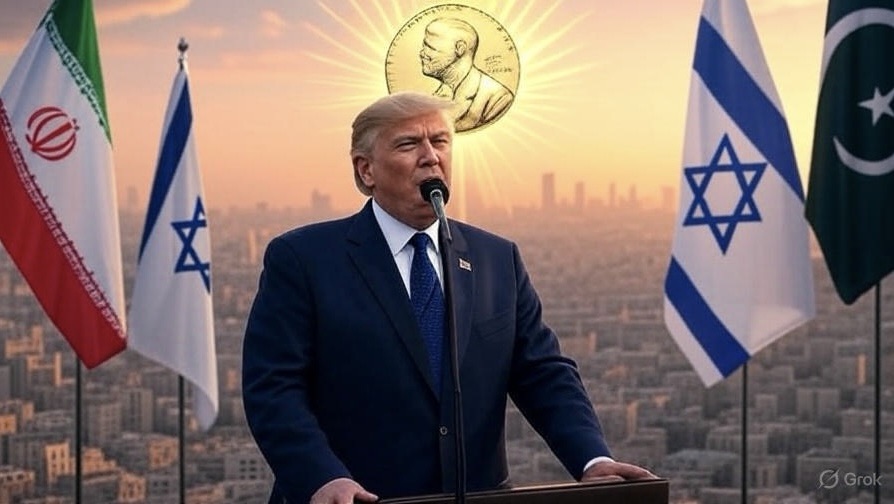
    Imagine a world where Middle East peace isn’t just a dream but a reality forged in a single phone call. That’s the electrifying narrative buzzing across platforms like X, where Donald Trump, the 47th President of the United States, is hailed as a peacemaker who stopped a war between Iran and Israel in mere minutes. And here’s the kicker: Pakistan is now championing Trump for the 2026 Nobel Peace Prize, not only for his Middle East diplomacy but also for averting a nuclear crisis in South Asia. As your guide to global events, I’m Christian Phillips, and I’m here to unpack this jaw-dropping story that’s set to reshape the world!

    Trump’s Game-Changing Call: Peace in Minutes?

    Picture this: Donald Trump picks up the phone, dials world leaders, and within minutes, defuses one of the most volatile conflicts in modern history. According to posts flooding X, Trump spoke directly with Israel and Iran, urging an immediate ceasefire that reportedly phased in over 24 hours. On June 13, 2025, Israel struck Iran’s nuclear facilities, triggering retaliatory attacks from Tehran. The region was a powder keg, with over 400 lives lost in Iran and 24 in Israel, per reports.

    Then came Trump’s diplomacy. X users claim he “asked Israel to back off” and thanked Iran, a move that, if true, could mark a historic turning point. While these reports await official confirmation, they highlight Trump’s knack for bold, unconventional leadership. His administration has vowed to end conflicts like the Israel-Gaza war and Russia-Ukraine conflict, but this alleged Iran-Israel peace deal is stealing the spotlight. Could this be the moment the Middle East finds stability?

    Pakistan’s Bold Endorsement: A Nobel for Trump

    The plot thickens with Pakistan’s stunning move to nominate Trump for the 2026 Nobel Peace Prize. Why? For his “decisive intervention” in de-escalating a near-catastrophic India-Pakistan crisis in May 2025. Tensions over a cross-border incident threatened nuclear escalation, but Trump, alongside Secretary of State Marco Rubio, brokered a ceasefire agreement that cooled the region. Pakistan’s Foreign Ministry, led by Deputy Prime Minister Ishaq Dar, praised Trump’s “pragmatic diplomacy” in a letter to the Nobel Peace Prize Committee, citing his contributions to global stability.

    This nomination isn’t without controversy. Critics in Pakistan, including journalist Zahid Hussain, argue Trump’s support for Israel’s actions in Gaza and Iran undercuts his peacemaker image. Yet, the endorsement has sparked a global conversation, with X users joking that Iran might nominate him next! Whether you agree or not, Pakistan’s bold stance underscores Trump’s growing influence in global diplomacy.

    A Legacy of Peace: Trump’s Global Impact

    Trump’s diplomatic resume is stacking up. From the Abraham Accords, which normalized ties between Israel and Arab states, to a Rwanda-Congo peace treaty in 2025, his track record is undeniable. On Truth Social, Trump has vented about being snubbed by the Nobel Peace Prize committee, writing, “No, I won’t get a Nobel Peace Prize no matter what I do, including Russia/Ukraine, and Israel/Iran, but the people know!” With Pakistan’s nomination, though, the tide may be turning.

    The Nobel Peace Prize, awarded for advancing “fraternity between nations,” seems tailor-made for Trump’s unconventional approach. X posts are ablaze with support, some calling him the “Peace President” and others humorously suggesting Pakistan might award him the Nishan-e-Haider next!

    Why This Matters (and Why You Should Care)

    The Iran-Israel ceasefire, if confirmed, could be a cornerstone for Middle East peace. Trump’s ability to navigate these high-stakes rivalries—while polarizing—offers hope for a world weary of conflict. Pakistan’s push for his Nobel Peace Prize amplifies this moment, positioning Trump as a transformative figure in global politics. As I write this, I’m struck by the audacity of it all: a leader who thrives on bold moves, rewriting the rules of diplomacy.

    Join the Global Conversation

    What do you think of Trump’s role in the Iran-Israel peace talks? Is Pakistan’s Nobel Peace Prize nomination a game-changer? Could this spark lasting Middle East stability? Drop your thoughts in the comments, share this post, and let’s keep the dialogue alive! Subscribe to my blog for the latest on Trump’s diplomacy, Middle East peace efforts, and the quest for global stability.

    Christian Phillips is a passionate blogger covering global politics and peace initiatives. Follow him for insights into the events shaping our world.

    “Trump’s Historic Peace: Iran, Israel, and Pakistan Unite”
  • The Middle East Powder Keg: Why Iran’s Nuclear Threat Must Be Stopped and America Must Support Israel Without Boots on the Ground

    By Christian Phillips

    June 18, 2025

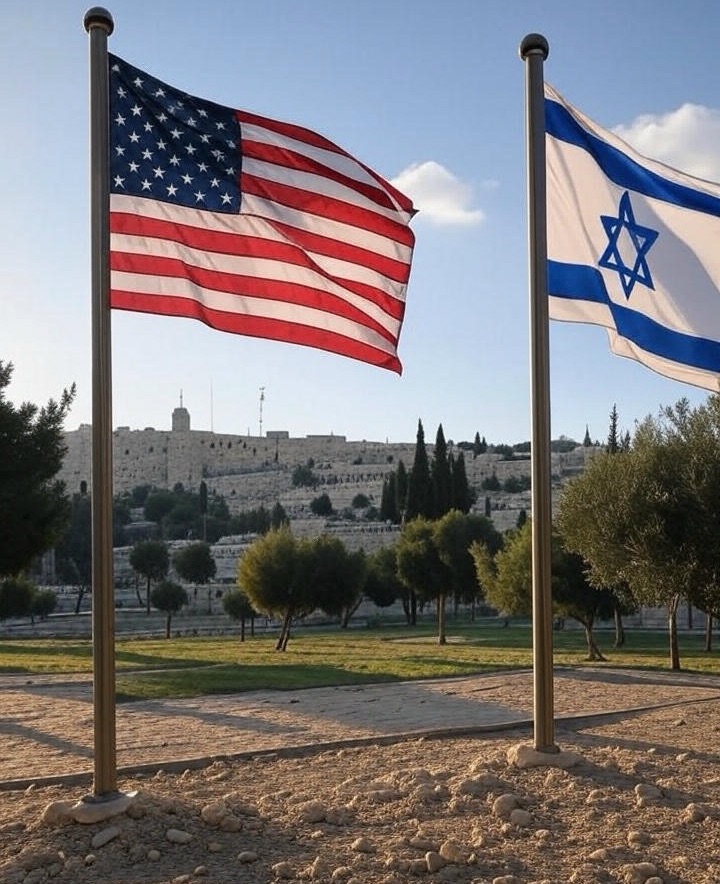
    As a Messianic believer, my heart is with Israel—the land and people chosen by God, where over 700,000 U.S. citizens live and thrive. The Middle East is on fire again, with Israel’s bold strikes against Iran’s nuclear facilities and Iran’s missile attacks in retaliation. This conflict isn’t just about regional power; it’s a battle to prevent a nuclear Iran from unleashing chaos on the world. We must stand with Israel at all costs, even if it means supplying bunker-busting bombs to protect the region. But as a constitutional patriot, I’m clear: America must support our ally without putting boots on the ground. This isn’t our fight to fight—it’s Israel’s, and they’re ready. Here’s why Iran’s nuclear ambitions threaten global stability, the history behind this crisis, and how we can defend Israel while keeping America First.

    The Middle East War: A Global Crisis in the Making

    On June 13, 2025, Israel launched “Operation Rising Lion,” a massive air campaign targeting Iran’s nuclear sites like Natanz and Isfahan, as well as military bases. Israel’s goal? To stop Iran from building a nuclear bomb that could threaten its existence. Iran fired back with ballistic missiles on Tel Aviv and Haifa, killing civilians and escalating fears of all-out war. As sirens wail and Tehran residents brace for more strikes, the world feels the tremors of this conflict.

    This war could shake the globe. Iran controls the Strait of Hormuz, through which 20% of the world’s oil flows. A prolonged conflict could spike gas prices, cripple economies, and hit American wallets hard. Russia’s offer to supply Iran with enriched uranium and China’s economic support for Tehran raise the stakes, threatening a new axis of power against the West. With over 700,000 U.S. citizens in Israel, we have a duty to protect them and our ally. But sending American troops? That’s a line we must not cross.

    Iran’s Nuclear Threat: A Danger to the World

    Iran’s nuclear program is the fuse on this powder keg. Despite claims of peaceful intent, Iran enriches uranium to 60%—a heartbeat away from the 90% needed for a bomb. Israel and U.S. intelligence warn Iran could go nuclear in months if unchecked. A nuclear-armed Iran would empower its proxies like Hezbollah and the Houthis, threaten Israel and Saudi Arabia, and spark a nuclear arms race in the Middle East. Imagine Saudi Arabia or Turkey racing to build their own nukes—stability would collapse.

    History tells us why Iran can’t be trusted with nuclear power. Since the 1979 Islamic Revolution, Iran’s leaders have vowed to destroy Israel, calling it the “Zionist entity.” They’ve funneled billions into terrorism and developed missiles like the “Haj Qassem” to strike far beyond their borders. The 2015 Iran Nuclear Deal (JCPOA) was supposed to rein them in, but it was toothless. President Trump’s 2018 withdrawal exposed its flaws, and Iran’s recent defiance—rejecting talks and hiding nuclear sites—proves they’re playing a deadly game.

    Israel’s Fight: Protecting the Region from Nuclear Holocaust

    Israel’s strikes are a desperate bid to prevent a nuclear holocaust. As a Messianic believer, I see Israel as God’s chosen people, a light unto the nations, and home to over 700,000 Americans who deserve safety. Israel, believed to hold 90 nuclear warheads, has a history of preemptive action—like the 1981 strike on Iraq’s Osirak reactor—to stop rogue states from going nuclear. Today, their targeting of Iran’s centrifuge facilities and power grids is about survival, not aggression.

    The U.S. must back Israel fully. If that means supplying bunker-busting bombs to destroy Iran’s fortified Fordo facility, so be it. War is ugly, but preventing a nuclear Iran is worth it to protect Israel, the region, and our citizens there. America’s role should include intelligence, missile defense systems, and weapons like the 30 refueling tankers already sent. But we must stop short of direct combat. Israel’s proven they can handle the fight—let them lead.

    America First: Support Israel, No Ground Troops

    My love for Israel runs deep, but as an American, I put our nation first. We’ve bled enough in Iraq and Afghanistan—trillions spent, thousands of heroes lost. Rep. Tim Burchett said it best: “Old men make decisions, and young men die.” Iran’s threats of “all-out war” if we join Israel’s fight are a red flag. President Trump, who promised to end forever wars, must resist the war hawks. Nikki Haley’s call to support Israel’s mission while letting Iranians shape their own future is the right path.

    We can defend Israel without sacrificing American lives. Supplying weapons, like bunker busters, and bolstering missile defenses shows strength without entanglement. With 700,000 U.S. citizens in Israel, we must protect them by empowering our ally, not by fighting their battles. This is Israel’s war, and as a Messianic believer, I trust they’ll prevail with God’s hand and our support.

    The Way Forward: Stand with Israel, Seek Peace

    The stakes couldn’t be higher. A nuclear Iran threatens Israel, our citizens, and the world. But a wider war could bankrupt our economy and empower our enemies. Diplomacy, though shaky, is still an option. Trump’s team is pushing for a new nuclear deal, and Iran has hinted at talks if we rein in Israel. We must explore every path to stop Iran’s nuclear program while keeping America out of the fight.

    As a Messianic believer, I stand with Israel and the 700,000 Americans there. We must defend them at all costs, even if it means hard choices like bunker busters. But America’s sons and daughters belong at home, not in another Middle East war. What do you think? Should we arm Israel to the teeth or risk another forever war? Share your thoughts below and join the fight for an America First future.

    Call to Action: If you believe America should stand with Israel without boots on the ground, share this on social media and comment below. Follow constitutionalpatriot.blog for more on defending our values and supporting our allies. Let’s make our voices heard!

  • Israel’s Bold Stand Against Iran: A Messianic Call for Peace and Protection

    By Christian Phillips

    As a Messianic believer, my heart beats for Israel, a nation that embodies God’s covenant with Abraham and shines as a beacon of hope in a turbulent world. On June 13, 2025, Israel stunned the globe with “Operation Rising Lion,” a daring strike that demolished Iran’s nuclear facilities at Natanz, crippled its ballistic missile program, and eliminated top military and nuclear leaders, including General Hossein Salami of the Islamic Revolutionary Guard Corps (IRGC) and Major General Mohammad Bagheri, Iran’s armed forces chief of staff. This courageous act has set back Iran’s dangerous nuclear ambitions, safeguarding not only Israel but the entire Middle East from a regime bent on chaos. As an American, I’m driven to declare why the United States, with over 600,000 of our citizens living in Israel, must stand firmly with our greatest ally. President Trump and the Republican Party must lead with diplomacy, rejecting the war-hawk zeal of figures like Senator Lindsey Graham, to secure peace while ensuring Israel’s defense. This is a call to faith, freedom, and the protection of Israeli and American lives.

    Israel’s Strike: A Shield for the Middle East

    Today’s news is historic. Israel’s precision airstrikes obliterated Iran’s nuclear enrichment site at Natanz, missile production facilities, and command centers, killing key figures like General Salami, General Bagheri, and nuclear scientists Fereydoon Abbasi and Mohammad Mehdi Tehranchi. This “decapitation” strike has gutted Iran’s ability to advance its nuclear program or coordinate military aggression in the near term. Prime Minister Benjamin Netanyahu called it a necessary act to “neutralize an existential threat,” and he’s absolutely right. Iran’s desperate retaliation—launching hundreds of ballistic missiles at Tel Aviv and Jerusalem, most intercepted by Israel’s Iron Dome—was the flailing of a wounded regime.

    Israel’s actions protect the entire Middle East. Iran’s nuclear quest threatened to arm a theocracy that fuels terrorism through proxies like Hamas, Hezbollah, and the Houthis. A nuclear-armed Iran could choke the Strait of Hormuz, sending oil prices soaring and destabilizing global markets, while bullying Sunni Arab states like Saudi Arabia and the UAE. By dismantling Iran’s nuclear infrastructure and leadership, Israel has loosened its grip on the region. In Lebanon and Syria, where Iran’s proxies once held sway, new pluralistic leaders are rising, a direct result of Israel’s resolve. This strike is a shield for stability, igniting hope in a region long plagued by chaos.

    Israel’s Right to Defend Itself: A Biblical and Historical Mandate

    As a Messianic believer, I see Israel’s fight as both a spiritual and historical calling. Established in 1948, Israel fulfills God’s promise to Abraham—a homeland for His chosen people, reborn from the ashes of the Holocaust. Since its founding, Israel has faced relentless hostility, fighting wars in 1948, 1967, and 1973 to secure its existence. The Six-Day War, where Israel preemptively struck to thwart annihilation, echoes today’s operation. Iran’s leaders, including Supreme Leader Ayatollah Ali Khamenei, who vowed “harsh punishment” after the strikes, openly deny Israel’s right to exist. Israel’s actions are not aggression but a righteous defense against a regime that persists in its nuclear pursuit, despite claims of peaceful intent.

    Israel is a light in a dark region. As the Middle East’s only democracy, it upholds freedom, innovation, and faith, standing in stark contrast to Iran’s oppressive theocracy. Israel forges peace through the Abraham Accords, pioneers life-saving technology, and embodies hope. When Netanyahu urged Iranians to rise against their regime, he spoke to their longing for freedom—a future Israel’s strikes are helping to forge.

    Why America Must Stand with Israel

    The United States has a sacred duty to defend Israel, starting with the 600,000 American citizens living there. These are our families, students, and retirees, facing the same missile barrages as Israelis. When Iran’s rockets targeted Jerusalem today, American lives hung in the balance. Protecting Israel is protecting our own people—it’s deeply personal.

    The U.S.-Israel alliance, forged after the 1973 Yom Kippur War, is a cornerstone of American security. Israel shares critical intelligence, develops technologies like the Iron Dome, and counters hostile powers like Russia and China, who back Iran. A stable Middle East benefits American families by keeping oil prices steady and trade routes open. If Iran went nuclear, the fallout—economic turmoil, emboldened terror groups—would hit our shores hard. Israel’s fight is our fight, rooted in shared values of faith, freedom, and resilience.

    Trump and the Republicans: Diplomacy Over War-Hawk Fervor

    President Donald Trump and the Republican Party face a defining moment. Trump has championed diplomacy, pushing for a “verified nuclear peace agreement” with Iran and setting a 60-day deadline for talks. After today’s strikes, which he called “very successful,” he urged Iran to negotiate, warning of dire consequences if they escalate further. As a Messianic believer, I applaud Trump’s pursuit of peace. War with Iran could spark a regional firestorm, drawing in global powers and devastating American families. We must avoid the reckless approach of war hawks like Senator Lindsey Graham, who’s quick to cheer “Game on” and push for conflict at every turn. Graham’s constant warmongering risks dragging us into a costly quagmire, ignoring the human and economic toll.

    Diplomacy must be backed by strength, however. Iran’s history of nuclear deception, exposed after the flawed 2015 JCPOA, demands vigilance. Republicans like Senator John Thune have supported Israel’s self-defense without Graham’s zeal for war. If Iran retaliates further, the U.S. must provide Israel with intelligence, refueling, and defensive support to protect Israeli and American lives. Trump’s team, including Secretary of State Marco Rubio, is already securing U.S. forces in the region, showing they understand the stakes. America must stand ready to back Israel militarily if diplomacy fails, but we cannot let war hawks like Graham dictate our path.

    A Call to Action: Stand with Israel, Honor Our Faith

    Today’s strikes mark a turning point. Israel has struck at the heart of Iran’s nuclear and military machine, protecting the Middle East from a regime bent on destruction. The 600,000 Americans in Israel, alongside millions of Israelis, need our unwavering support. As a Messianic believer, I see Israel as the fulfillment of God’s promise, a nation of redemption and hope in a hostile world.

    To my fellow Americans, contact your representatives and demand steadfast support for Israel, but urge them to prioritize diplomacy over war-hawk calls for conflict. To President Trump and the Republican Party: Lead with peace but stand ready to defend our ally with strength, not Graham’s reckless warmongering. To the people of Israel: You are not alone. Your courage inspires me, and as a Messianic believer, I stand with you, praying for your safety and the peace of Jerusalem. Today’s actions have made the world safer—let’s ensure that light shines for generations to come.

    Christian Phillips is a Messianic believer passionate about truth, freedom, and the unbreakable bond between America and Israel. Follow his blog for insights on faith, politics, and the fight for a better world.

  • The One Big Beautiful Bill Act: A Bold Vision Marred by Debt and Waste

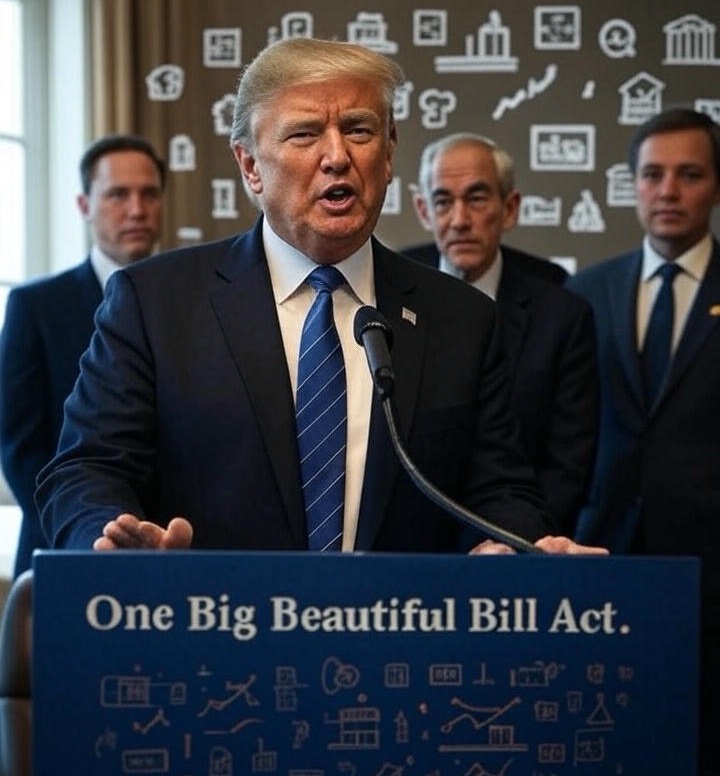
    President Donald Trump has thrown his weight behind the “One Big Beautiful Bill Act,” a sweeping reconciliation package touted as a fulfillment of his campaign promises. As of 10:33 AM EDT on Friday, June 6, 2025, this legislation has ignited fierce debate, with Trump and his supporters praising its focus on tax cuts, border security, and welfare reform, while critics—including Elon Musk, Rep. Thomas Massie, and former Rep. Ron Paul—warn of its potential to balloon the national debt and hide wasteful spending. For my blog readers, let’s break down why this bill sounds good in theory but may be a fiscal disaster in practice, exploring Trump’s viewpoint alongside those of Congress and influential voices like Musk, with a closer look at the alarming debt projections if this bill becomes law.

    Trump’s Case: Delivering on Promises for America

    Donald Trump has framed the One Big Beautiful Bill Act as a cornerstone of his agenda, aiming to deliver on key campaign pledges. The bill is said to focus on three main pillars: cutting taxes, strengthening border security, and reforming welfare programs. For Trump, this legislation is a chance to codify his “America First” policies into law, particularly by supporting small businesses, which he often describes as the backbone of the U.S. economy.

    Proponents of the bill highlight its benefits for small business owners, including increasing the small business tax deduction from 20% to 23% and making it permanent, raising the expensing cap for business equipment purchases from $1.25 million to $2.5 million, and ensuring that marginal income tax rate cuts from 2017 remain in place. Additionally, the bill increases estate tax exemptions to $15 million for individuals and $30 million for joint filers, protecting small business owners from hefty taxes when passing their businesses to heirs. These measures are designed to stimulate economic growth and provide relief to millions of small businesses across the country.

    Beyond tax cuts, the bill aims to “seal the border” through enhanced security measures and reform welfare programs to reduce dependency and fraud. For Trump and his base, these provisions address long-standing priorities, making the bill a victory for his supporters. Trump likely sees this legislation as a legacy-defining achievement, a bold step to reshape the economy and secure the nation.

    Critics in Congress: A Debt Bomb in Disguise

    Despite Trump’s enthusiasm, the bill has faced significant pushback from members of Congress, particularly fiscal conservatives who are alarmed by its projected impact on the national debt. Non-partisan analyses from organizations like the Congressional Budget Office (CBO), the Congressional Research Service (CRFB), and the Tax Foundation have estimated that the reconciliation package could add more than $2 trillion to the federal deficit over the next decade if passed, with some projections suggesting it could exceed $3 trillion when accounting for increased debt payments over time.

    The CBO’s latest report, released in early June 2025, projects that the bill’s tax cuts and spending measures would increase the federal deficit by approximately $2.1 trillion by 2035, assuming current economic conditions and no significant policy offsets. When factoring in rising interest rates on this new debt—expected to average 3.5% over the next decade—the CRFB estimates an additional $800 billion to $1 trillion in interest payments, pushing the total debt impact closer to $3 trillion. The Tax Foundation further warns that this debt could crowd out private investment, potentially slowing economic growth by 0.5% annually, a cost that would disproportionately affect future generations.

    Rep. Thomas Massie, a libertarian-leaning Republican, has likely emerged as a vocal critic of the bill. Known for his staunch opposition to government overreach and excessive spending, Massie would argue that the bill’s tax cuts, while appealing, come at an unsustainable cost. The projected $2–3 trillion debt increase undermines any short-term economic benefits, in his view, and risks saddling future generations with an unmanageable financial burden. Former Rep. Ron Paul, a longtime advocate for fiscal responsibility, would echo this sentiment. Paul has consistently warned against expanding the national debt, and he would likely view this bill as a betrayal of conservative principles, even if it includes popular measures like tax relief.

    These concerns from Congress highlight a broader tension: while the bill’s goals may resonate with many Americans, its fiscal implications could have devastating long-term consequences. For Massie, Paul, and their allies, the numbers don’t lie—trillions in new debt signal a reckless approach to governance.

    Elon Musk’s Take: A Business Leader’s Red Flags

    Elon Musk, the billionaire entrepreneur and a prominent voice in political discourse, has also weighed in on the One Big Beautiful Bill Act. Musk, who has occasionally supported Trump’s policies, is known for his sharp critiques of government inefficiency and wasteful spending. In the context of this bill, Musk would likely acknowledge the theoretical benefits of its tax cuts and small business incentives but argue that they are overshadowed by its fiscal irresponsibility.

    Musk has long advocated for reducing the national debt and cutting government waste, often pointing out that billions in federal spending could be eliminated without harming essential services. For him, a bill that adds $2–3 trillion to the deficit is a non-starter, especially with the CBO’s projection of $2.1 trillion in new debt by 2035 and the CRFB’s estimate of up to $3 trillion when interest is included. Higher debt levels could lead to increased interest rates, inflation, and economic instability—factors that directly impact businesses, including Musk’s own ventures like Tesla and SpaceX. Musk would likely argue that the bill fails to address systemic inefficiencies in government spending, making it a risky proposition for the nation’s economic future.

    The Hidden Waste: Pork and Spending Run Amok

    Supporters of the bill insist that it is free of “pork”—unnecessary or wasteful spending often tucked into large legislative packages. However, critics like Massie, Paul, and Musk are skeptical, pointing to the bill’s massive debt projections as evidence of hidden waste. Reconciliation bills, which can pass with a simple majority in the Senate, are notorious for becoming vehicles for unrelated provisions, pet projects, and earmarks that inflate costs without delivering meaningful benefits.

    Potential areas of waste in the One Big Beautiful Bill Act could include:

    Overfunded Border Security: While enhancing border security is a stated goal, the bill may allocate excessive funds to contracts for construction, technology, or personnel—costs that often spiral beyond what’s necessary, as seen in past border initiatives.

    Welfare Reform Expenses: Reforming welfare programs can involve significant transitional costs, such as funding for new administrative systems or temporary subsidies, which may balloon into wasteful spending if not tightly controlled.

    Unrelated Provisions: Large reconciliation packages often include industry-specific subsidies, infrastructure projects, or other measures that don’t align with the bill’s core objectives, adding to its overall cost.

    These elements of pork and waste contribute to the bill’s projected $2–3 trillion debt increase, undermining its fiscal credibility. For critics, the bill’s benefits are dwarfed by its long-term costs, making it a risky gamble for the nation’s future.

    Good in Theory, Flawed in Execution

    On paper, the One Big Beautiful Bill Act has a lot going for it. Its tax cuts and small business incentives could provide much-needed relief to millions of entrepreneurs, fostering economic growth and innovation. The focus on border security and welfare reform addresses pressing issues for many Americans, aligning with Trump’s campaign promises. However, the bill’s execution raises serious concerns. The projected $2.1 trillion in new debt by 2035, potentially rising to $3 trillion with interest payments, poses a significant threat to economic stability, as outlined by the CBO and CRFB. Hidden pork and wasteful spending further erode its credibility as a fiscally responsible piece of legislation.

    Conclusion: A Bill That Promises Much but Risks More

    The One Big Beautiful Bill Act encapsulates the promise and peril of Trump’s agenda. On one hand, it offers tangible benefits for small businesses and addresses key priorities like border security and welfare reform. On the other hand, its massive debt implications—projected at $2.1–3 trillion over the next decade—and potential for waste have sparked alarm among fiscal conservatives in Congress, as well as influential figures like Elon Musk, Thomas Massie, and Ron Paul.

    As the debate over this bill unfolds, Americans are left with a critical question: Is the One Big Beautiful Bill Act a transformative piece of legislation, or a fiscal time bomb waiting to explode? With the CBO projecting a $2.1 trillion deficit increase and the CRFB warning of up to $3 trillion when interest is factored in, the stakes couldn’t be higher. The answer could shape the nation’s economic future—and Trump’s legacy—for decades to come.

    Call to Action

    I’d love to hear your thoughts, readers! What do you think about the One Big Beautiful Bill Act? Do you see it as a bold step forward for small businesses and border security, or are you concerned about the $2–3 trillion debt projection? Share your insights and perspectives in the comments below—I’m excited to see what you think!

  • Taxation is theft!

    The Paradox of Taxation in America

    I’ve never understood how America went from fighting a Revolutionary War over taxation without representation to a system where I’m taxed at every turn. The colonists rebelled against taxes like the Stamp Act and Tea Act, imposed by a distant government without their consent. Yet today, I work hard, and my income gets taxed—federal income tax rates can take up to 37% for top earners, according to the IRS for 2025.

    A Cycle of Endless Taxes

    I take what’s left after income tax, buy something, and face sales taxes—state and local rates combined can hit over 10% in places like California or Tennessee. That same money, already taxed, pays for my property, but then I’m hit with property taxes—averaging 1.1% of a home’s value annually, per the Tax Foundation, and higher in states like New Jersey or Illinois. I call this extortion!

    Our Founding Fathers, like Thomas Jefferson, warned against overreach, saying, “To take from one, because it is thought his own industry… has acquired too much, in order to spare to others, who… have not exercised equal industry and skill, is to violate arbitrarily the first principle of association.” They fought for liberty, not this cycle of endless taxation.

    A Tax Code Out of Control

    The Declaration of Independence lists “imposing Taxes without our Consent” as a grievance, yet today, the federal tax code is over 70,000 pages long. The average American spends 13 hours just filing taxes, per the IRS. We need reform!

    The national debt is over $35 trillion as of 2025, per the U.S. Treasury, and government spending keeps ballooning—$6.5 trillion in federal outlays last year alone, much of it on programs with little accountability.

    Political Failures on Both Sides

    The GOP talks a big game but often fails to cut waste or simplify taxes. Meanwhile, Democrats are obsessed with raising taxes and offer no real help. They push to tax the rich and corporations into oblivion—proposing top income tax rates as high as 39.6%, like in Biden’s early budgets, and floating wealth taxes on billionaires, like Elizabeth Warren’s 2% levy on net worth over $50 million.

    They claim it’s fairness, but France tried a 75% supertax on high earners in 2012, and millionaires fled, tanking investment. The U.S. risks the same—companies like Apple and Tesla already park billions overseas to dodge high taxes, per a 2021 Senate Finance Committee report showing $2.6 trillion in profits stashed abroad.

    The Cost of Tax Hikes

    Democrats’ tax hikes don’t fix anything! They poured $1.9 trillion into the American Rescue Plan in 2021, yet inflation soared to 9.1% by 2022, crushing families, per the Bureau of Labor Statistics. Small businesses got pennies while fraudsters stole billions—$100 billion in pandemic relief was lost to waste and scams, per the Government Accountability Office.

    Instead of cutting red tape or boosting jobs, Democrats double down, pushing corporate tax rates from 21% to 28% or higher, as in Biden’s 2023 budget proposal. The Tax Foundation warned this could cut GDP by 0.2% and kill 27,000 jobs, driving firms to China or Ireland, where rates are 25% or 12.5%. They’d rather tax companies out of the U.S. economy than fix roads, secure borders, or help working families like us!

    The Promise of DOGE

    The GOP must step up! The Department of Government Efficiency (DOGE), launched by President Trump in 2025, has exposed billions in improper payments—$334 million in rejected Treasury requests alone, per DOGE’s April 2025 report, due to missing or invalid budget codes. They’ve suspended payments to 33 providers suspected of fraud at CMS, like billing for dead patients, and cleaned up Social Security, marking 12.3 million records of people aged 120+ as deceased. This is real progress!

    But without laws to lock in these cuts, a future administration could undo it all. The GOP controls the House and Senate—pass the Implementing DOGE Act (H.R. 199) now! Codify these $160 billion in savings, as DOGE claims, and stop career politicians like Susan Collins and Tom Cole from blocking reform. No more excuses—Republicans, fulfill the mandate, protect taxpayers, and make DOGE’s war on waste permanent!

    A Call to Action

    Corruption’s rampant, and I’m not sure we can save this country with this mismanagement. We’re taxed on income, purchases, and property—sometimes the same dollar three times over. Our Founders envisioned limited government, not this. We need a simpler tax code, less waste, and leaders who’ll fight for us, not their own power. Wake up, America—demand change!

    Written by Christian Phillips

  • The Federal Reserve is Unconstitutional and Must Be Abolished!

    Friends, it’s time we talk about something that affects every single one of us: the Federal Reserve. This secretive, unelected institution controls our money, our economy, and, in many ways, our lives. I believe it’s not only unconstitutional but also a danger to our freedom. The Federal Reserve Act of 1913 was a mistake that needs to be undone. Let me explain why, with historical facts to back it up.

    The Constitution Says No to Central Banking The U.S. Constitution is clear about who should control our money. Article I, Section 8, Clause 5 gives Congress the power “to coin Money, regulate the Value thereof, and of foreign Coin.” That’s it. The power to create and manage money belongs to our elected representatives, not a private banking cartel. The Federal Reserve, created in 1913, is a quasi-private institution—a hybrid of government and private bankers—that operates outside the direct control of Congress or the people. This setup violates the Constitution’s explicit delegation of monetary power to Congress.

    The Founding Fathers knew the dangers of central banks. Thomas Jefferson warned, “If the American people ever allow private banks to control the issue of their currency… the banks and corporations that will grow up around them will deprive the people of all property until their children wake up homeless.” James Madison called concentrated banking power “a great evil.” These men fought for a republic where power was accountable to the people, not to unelected elites. The Federal Reserve flips that principle on its head.

    The Shady Origins of the Federal Reserve Act Let’s go back to 1913. The Federal Reserve Act wasn’t passed in the light of day with broad public support. It was crafted in secret by powerful bankers and their political allies. In 1910, a group of banking tycoons—including representatives from J.P. Morgan, Rockefeller, and Warburg—met on Jekyll Island, Georgia, to design a central bank that would protect their interests. They didn’t want a fully government-controlled system; they wanted a bank that gave them influence over the nation’s money supply while shielding them from public scrutiny.

    The result was the Federal Reserve Act, rushed through Congress just before Christmas in 1913 when many lawmakers were absent. President Woodrow Wilson signed it into law, later admitting regret: “I have unwittingly ruined my country.” This wasn’t a democratic triumph—it was a power grab by financial elites.

    Why the Fed is a Problem The Federal Reserve controls the money supply by printing money and setting interest rates, which impacts everything from your grocery bill to your mortgage. But here’s the kicker: it’s not accountable to you or me. The Fed’s Board of Governors and its regional banks include private bankers who prioritize profits over the public good. Since 1913, the dollar has lost over 95% of its purchasing power due to inflation, much of it driven by the Fed’s policies. Meanwhile, the national debt has skyrocketed, partly because the Fed enables deficit spending by buying government bonds with freshly printed money.

    The Fed also fuels inequality. Its policies, like quantitative easing, pump money into financial markets, boosting stock prices and benefiting the wealthy while everyday Americans face rising costs. The Panic of 1907, which bankers used to justify creating the Fed, was itself orchestrated by Wall Street to consolidate power. The Fed didn’t fix economic instability—it institutionalized it.

    Historical Voices Against the Fed I’m not alone in this fight. Throughout history, patriots have opposed central banking. Andrew Jackson, in the 1830s, fought the Second Bank of the United States, a precursor to the Fed, calling it a “den of vipers” and refusing to renew its charter. His victory returned monetary control to the people’s representatives. In the 20th century, Congressman Louis McFadden, who chaired the House Banking Committee, exposed the Fed’s dangers, saying it was “one of the most corrupt institutions the world has ever known.” Even today, figures like Ron Paul have called for auditing and abolishing the Fed, echoing the Founders’ warnings.

    Why Abolish the 1913 Law? Repealing the Federal Reserve Act would restore constitutional authority over money to Congress. It would end the Fed’s ability to manipulate the economy for the benefit of a few. We could return to a sound money system—backed by gold or silver, as the Constitution implies—to stabilize prices and protect savings. Without the Fed, the government would have to live within its means, reducing the debt burden on future generations.

    What Can We Do? This isn’t just history—it’s our future. We need to spread the word, demand accountability, and push our leaders to audit the Fed and repeal the Federal Reserve Act of 1913. Share this post, talk to your friends, and contact your representatives. Let’s take back control of our money and our country.

    Together, we can end this unconstitutional system and build an economy that works for all Americans, not just the elites. Who’s with me?

    Written by -Christian Phillips